What Is Swap in Forex? Overnight Fees, Triple Swap and Real Trading Costs
Understanding the concept of a swap is crucial for any trader holding positions beyond the daily market close at 4:59:59 PM EST. This mechanism represents the interest differential between two currencies, which can either lead to a credit or a debit on the trading account.
These overnight fees form a vital part of trading costs that must be considered by all participants. By mastering how swaps function, traders can effectively manage their exposure and potentially improve their long-term profitability.
This guide offers a comprehensive overview of these interest-based charges. It highlights their significance and impact on daily trading activities. Grasping these details can make a significant difference in achieving success in the global trading arena.
Exploring the Concept of Forex Swaps
The dynamics of currency swaps play a vital role in trading. Understanding these financial instruments can help traders manage costs effectively. A currency swap involves two parties exchanging principal and interest payments in different currencies. This arrangement allows them to meet specific funding needs while navigating the complexities of the market.
Interest rates significantly influence these swaps. The interest rate differential between nations, such as the United States and the Eurozone, dictates the costs or benefits of holding a currency pair. This relationship is crucial for traders to comprehend.
- Financial institutions use swaps to hedge against long-term currency risks.
- These instruments help avoid direct exposure to volatile foreign debt markets.
- Understanding interest rates reflects central bank policies that impact swap values.
- When engaging in currency exchange, one borrows one currency to lend another.
what is swap in forex: Deep Dive into Overnight Fees

Exploring overnight fees provides insights into their role in managing trading costs. Understanding these fees is crucial for traders who hold positions beyond the daily market close. This practice can significantly impact overall profitability.
Mechanics of Overnight Positions
Most currency pairs operate on a T+2 settlement basis. This means that the market must account for the weekend by applying a triple swap on Wednesdays. Consequently, traders need to be aware that holding positions through the Wednesday rollover results in a larger swap adjustment compared to standard trading days.
Understanding Triple Swap Days
The triple swap effectively charges or credits three days of interest to cover the Saturday and Sunday period when the global market is closed. The mechanics of overnight positions ensure that the interest rate differential is consistently applied to every open trade remaining active past the daily cutoff.
By recognizing the value of these adjustments, traders can avoid unexpected deductions that might otherwise erode the profitability of their long-term currency trade strategies.
Interest Rate Differentials and Their Impact on Trading Costs

Interest rate differentials serve as a crucial factor in determining trading costs. Understanding how these rates affect swap payments can enhance a trader’s strategy and overall profitability.
When evaluating the relationship between currencies, consider the following:
- Interest rates set by central banks, such as the Federal Reserve or the European Central Bank, are the primary drivers behind the swap payments you receive or pay.
- Holding a position in a currency with a higher interest rate against one with a lower rate may yield a positive swap payment.
- Conversely, maintaining a position in a lower-interest currency against a higher-interest one will typically result in a negative swap cost deducted from your account.
- The significance of rate differentials cannot be overstated, as they represent the fundamental cost of carry for any leveraged position held in the market.
- Savvy traders monitor these interest rate changes closely to ensure their trading costs align with their profit expectations and risk management goals.
Different Types of Forex Swaps and Their Applications
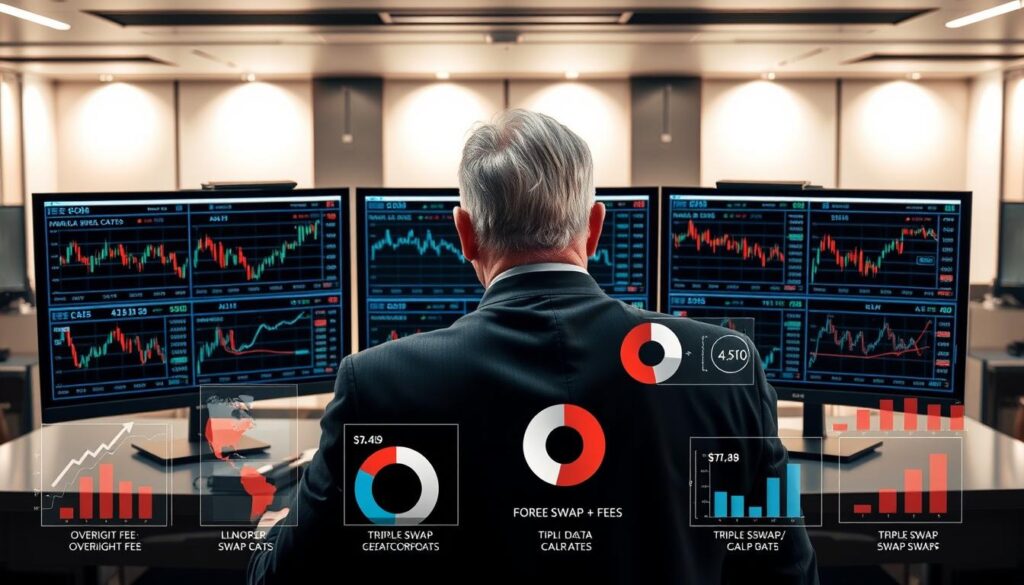
Various types of swaps exist, each serving distinct purposes in trading. Understanding these differences can greatly influence a trader’s strategy and decision-making process.
Forward Swaps and Spot Next Swaps Explained
Forward swaps involve an agreement to exchange currencies at a predetermined rate on a specific future date. Corporations commonly use this method for hedging against currency fluctuations.
On the other hand, spot next swaps are the most prevalent instruments for retail traders. They automatically apply to overnight positions, rolling them forward to the next business day.
An Overview of Currency Basis and Cross-Currency Swaps
Currency basis swaps are more complex instruments used by institutions. They allow for the exchange of both principal and interest payments over a longer duration, often spanning several years.
These different types of instruments serve distinct purposes, ranging from short-term liquidity management to long-term hedging of foreign currency exposure for multinational companies.
Understanding the nuances between these various swaps allows traders to select the right tools for their specific financial objectives and market conditions.
Currency Swaps and Cross-Border Trading Fundamentals
Currency exchange agreements have transformed the landscape of international finance. The landmark 1981 agreement between the World Bank and IBM, facilitated by Salomon Brothers, established the modern framework for cross-border currency swaps.
These agreements allow a company to access foreign currency funding by exchanging principal amounts with another party. This effectively bypasses restrictive local debt markets.
During the life of the agreement, the two parties exchange periodic interest payments in their respective currencies. This compensates for the borrowed capital involved in the currency swap.
At the maturity date, the parties re-exchange the original principal amounts. This ensures that both sides return to their domestic currency position without long-term exchange risk.
This dual-leg structure is fundamental to international trading. It provides a mechanism for firms to manage their global cash flows and currency exposure efficiently.
Calculating Swaps: Formulas and Real Trading Examples

Calculating the costs associated with trading positions is essential for every trader. Understanding how to compute these costs can lead to better decision-making and enhanced profitability.
The standard formula for calculating swaps considers the contract size, price, and the interest rate differential divided by 365 days. This helps determine the daily fee applied to a position.
The Swap Calculation Formula
For example, when going long on the AUD/JPY pair, traders can capture the interest rate differential between Australia’s 4.35% rate and Japan’s near-zero rate. This can lead to favorable swap payments.
Practical Trading Scenarios and Cost Implications
In a practical scenario, if a trader buys 100,000 EUR/USD, the broker will apply the swap based on the specific interest rates set by the ECB and the Fed. Additionally, a spot rate of 1.5 EUR/CAD illustrates how parties exchange principal amounts effectively.
By accurately calculating these costs, traders can determine if a specific trade will be profitable after considering daily interest payments and potential price movements.
Risk Management in Forex Swaps and Related Instruments

Effective risk management is essential for traders navigating the complexities of currency trading. Various risks can impact profitability, and understanding these is crucial for success.
One major concern is counterparty risk. This risk arises because the broker is the primary entity responsible for honoring swap payments. If the broker fails, traders may face significant losses.
Another critical factor is market liquidity risk. During high volatility, it can be challenging to exit positions at favorable prices. This situation can lead to unexpected losses.
Operational risks also play a role. Miscalculating swap costs or experiencing platform errors can compound financial losses. Monitoring these factors diligently is essential.
Settlement challenges often occur with cross-border instruments. Navigating different legal standards and regulatory jurisdictions can complicate transactions.
To manage these risks effectively, traders should view swaps as just one part of their strategy. Over-leveraging based solely on positive interest payments can lead to financial pitfalls.
Incorporating Swaps into a Comprehensive Trading Strategy
Incorporating swaps into a trading strategy can significantly enhance a trader’s potential for profit. A positive carry trade involves holding positions in currency pairs where the interest rate differential works in your favor. This allows traders to earn daily swap payments that can bolster their overall returns.
Savvy traders seamlessly integrate these payments into their trading strategies. This approach supplements profits generated from favorable price movements in the forex market. By using a demo account, one can observe how different currency pairs accumulate positive or negative swaps over time without risking actual capital.
However, successful implementation requires a deep understanding of interest rate changes. These changes can suddenly turn a profitable carry trade into a losing one. Integrating swap awareness into daily routines transforms traders from passive participants into strategic players who grasp the time value of money.
Global Market Conditions and Swap Influences in the UK
Global economic factors play a significant role in determining swap rates for traders. Understanding how these elements interact is essential for effective trading strategies.
Regulatory considerations are crucial for UK traders. They must remain aware of how brokers display and apply swap rates to their retail trading accounts. This awareness helps ensure transparency and compliance with local laws.
Regulatory Considerations for UK Traders
Traders should familiarize themselves with the regulations governing swap applications. Compliance not only protects their interests but also enhances their trading experience.
Impact of Market Volatility on Swap Costs
Market conditions can shift rapidly. Sudden changes in central bank policies may lead to swift adjustments in swap rates that affect open positions. Increased volatility often forces brokers to widen spreads or modify swap costs.
Staying informed about the economic landscape in the UK and globally is vital. Proactive monitoring allows traders to anticipate how these factors influence daily swap charges.
- Awareness of regulatory guidelines ensures fair swap applications.
- Market shifts can cause rapid changes in swap rates.
- Volatility may lead to wider spreads, impacting costs.
- Informed traders can adjust strategies proactively.
- Monitoring external influences aids in managing portfolio performance.
Final Insights on Maximizing Benefits from Forex Swaps
Familiarity with how interest rates and market conditions affect trading can lead to more informed decision-making. Mastering the mechanics of swaps allows traders to transform overnight charges into strategic advantages for their accounts.
By analyzing interest rate differentials, opportunities for consistent payments can be identified while holding long-term positions. However, it’s essential to remember that swaps are just one piece of the trading puzzle.
Sound risk management and thorough market analysis should always be prioritized. Whether dealing with simple spot trades or complex agreements, understanding the underlying mechanics is crucial for long-term success.
We encourage traders to explore these instruments further to maximize capital benefits while minimizing risks related to liquidity and interest rate fluctuations.